3 Explore the Developer Console
Prerequisites
-
You have access to our OpenShift Console: https:///console.chp5-test.npocloud.nl/
-
You have credentials to log in. Please contact NPO Hosting if you don’t have these already.
Introduction
OpenShift 4.x provides a Web Web Console for anyone trying to deploy and manage applications to the cluster.
Explore
-
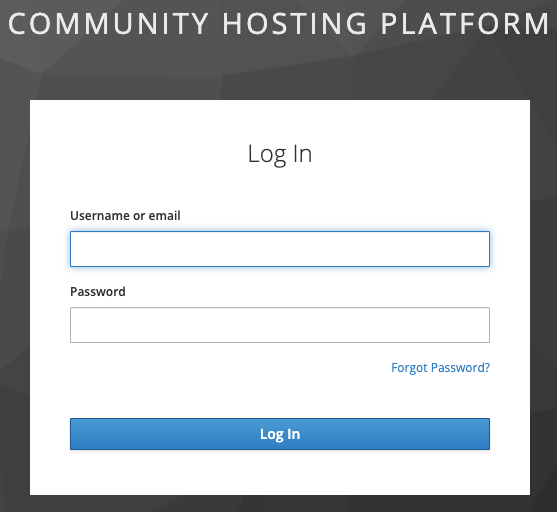
Paste the Web Console URL in the browser. It will ask you to log in.
-
Login with your credentials, i.e.,
usernameandpasswordassigned to you. -
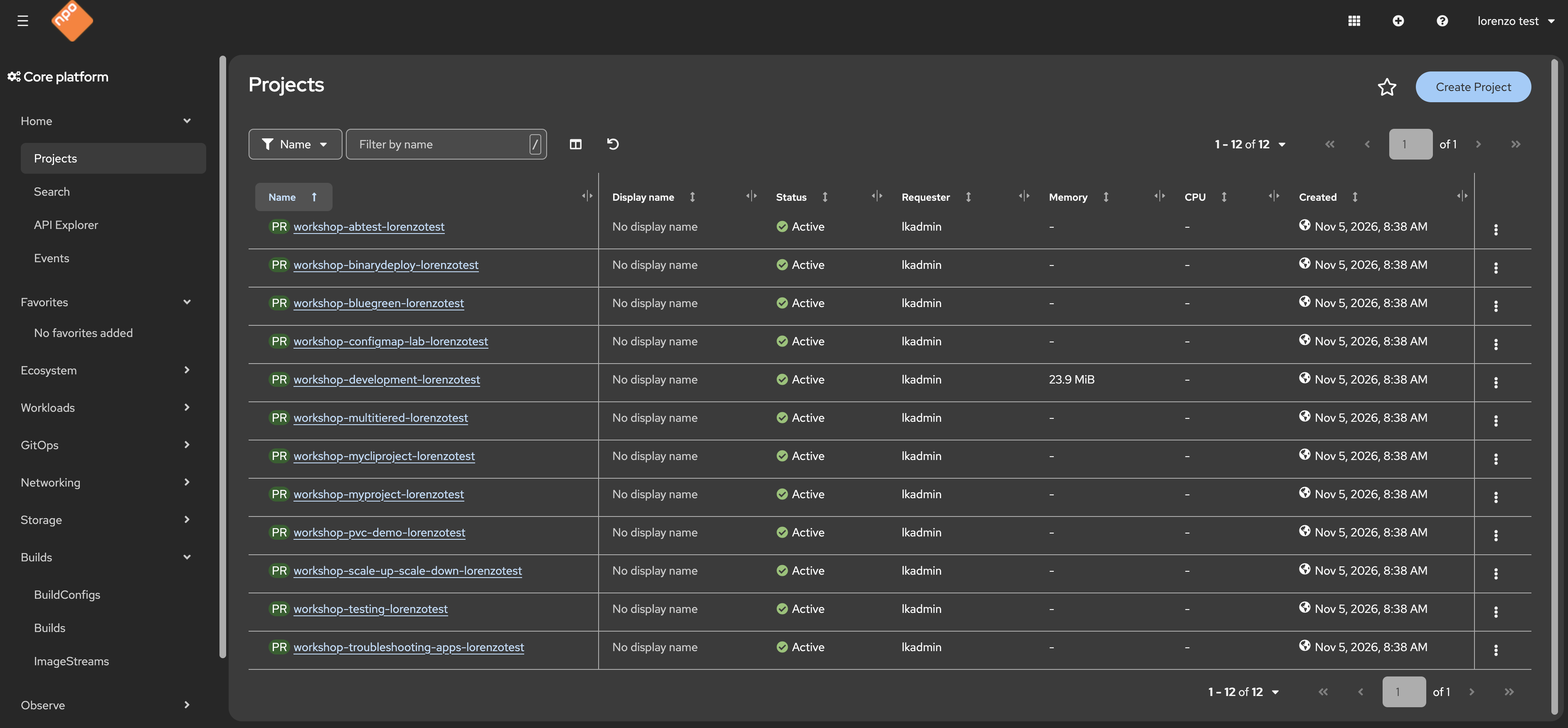
Once you log in, you’ll see a page similar to what shown below. Notice your
usernameon the right top corner. Also, notice the menu bar on the left.
-
Select Create Project button item to create a new project. Name the project based on your
name, e.g.workshop-tim. Project names are unique in a multi-user cluster. -
Take your time and explore menu options.
-
Topology shows the applications deployed. Since we haven’t deployed anything yet, it just shows different ways to deploy workloads in this project.
-
Builds shows the OpenShift build configurations. Once a build configuration created, you can execute, view, and edit build configuration and view build logs.
-
Pipelines take you to the OpenShift pipeline. You can view, edit, and run tekton pipelines. Also, review the related pipeline resources, tasks, and logs.
-
Advanced Section includes a bunch of subsections.
-
Project Details shows the project’s status, inventory of all the objects deployed in this project, utilization of CPU, memory, resource quotas, and events.
-
Project Access allows you to add members and change their permissions.
-
Metrics allow you to query project metrics.
-
Search allows you to search for all the artifacts in this project.
-
Events show a stream of project events.
-
-
Review
In this lab, we logged into the cluster using Web Console and understood the layout and navigation of Web console.